Buying more compute does not automatically solve a cluster-performance problem. In many HPC environments, the harder challenge is operational: workloads queue behind the wrong resources, nodes sit underused, administrators spend time on repetitive tasks and users have limited visibility into why jobs are waiting. Cluster Management Software helps organisations address these problems by creating a more structured operating layer across shared compute infrastructure.
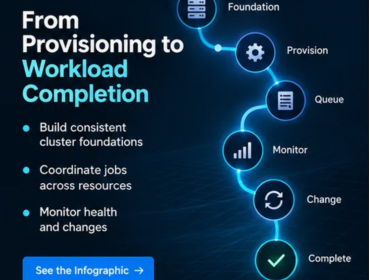
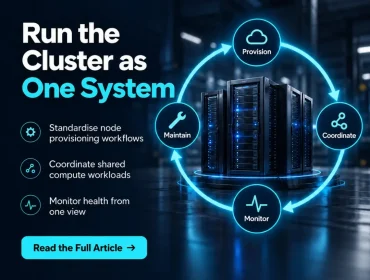
Effective Cluster Management is therefore less about one dashboard and more about coordination. It connects provisioning, HPC Workload Management, monitoring, resource visibility and administrative workflows so that the cluster can serve changing demand without adding unnecessary queue time or operational overhead.
The Operational Challenges That Reduce HPC Efficiency
Resource utilisation can look healthy while users still wait
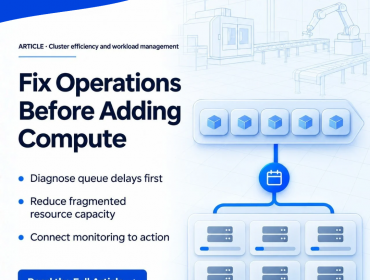
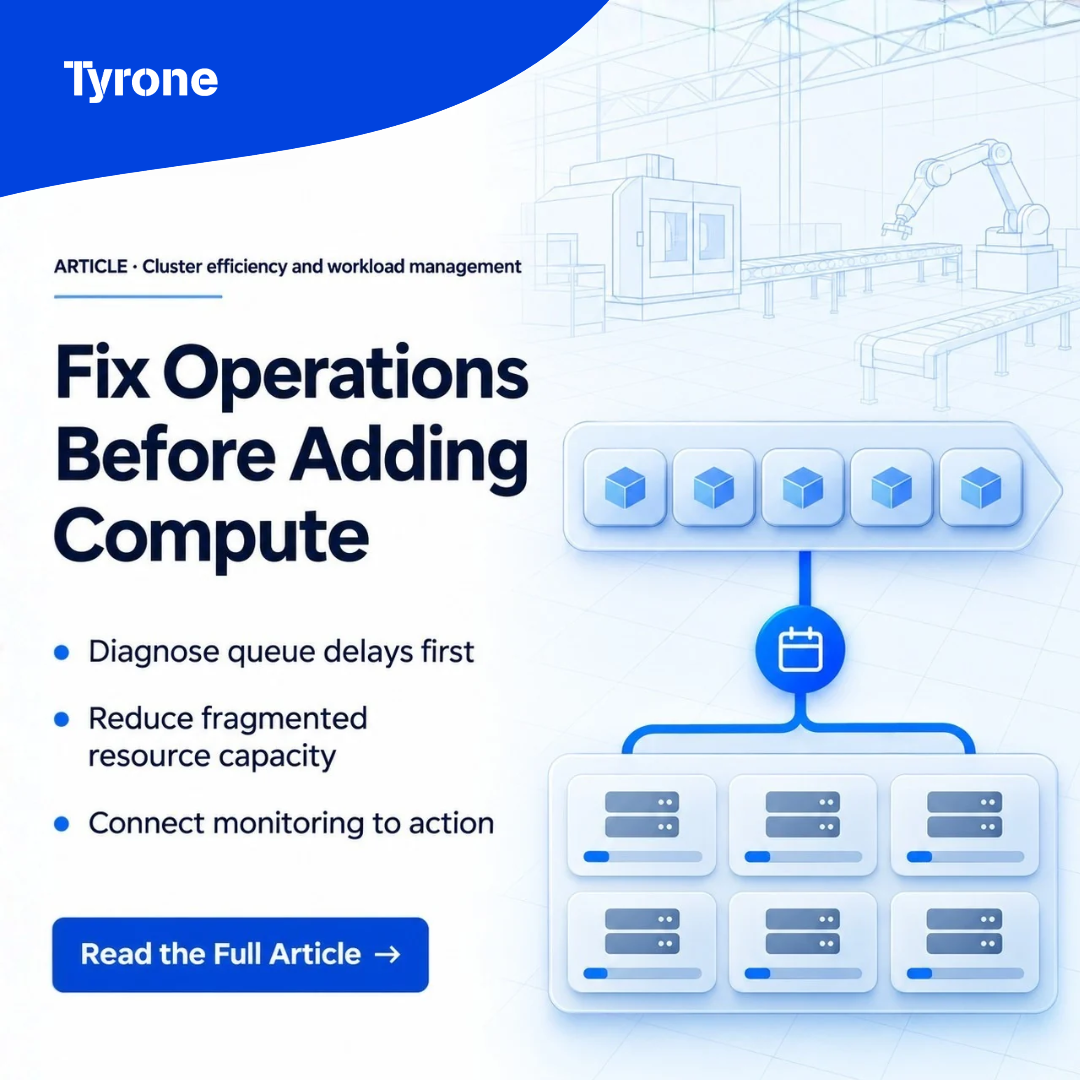
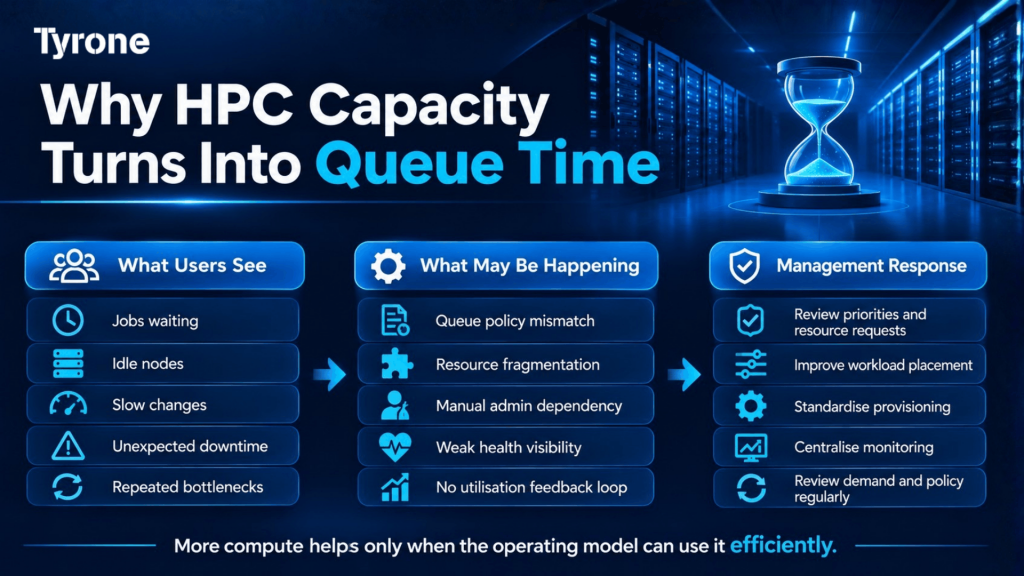
A cluster can show high aggregate utilisation and still deliver a poor user experience. The problem appears when the resources being consumed are not the resources the next workloads need. Large-memory jobs may wait behind CPU-heavy workloads, specialised nodes may be reserved inefficiently and users may request more resources than applications actually consume. The result is a scheduling problem rather than a simple capacity problem.
Queue time can become the hidden performance metric
Peak compute performance is easy to benchmark. Queue time is harder to see, yet it can dominate the end-to-end experience. If jobs wait because priorities are unclear, nodes are unavailable or workloads are poorly matched to resource pools, the cluster can feel slow even when individual nodes are fast. HPC Workload Management needs to make these bottlenecks visible enough to act on.
Administration becomes a bottleneck as clusters grow
Every manual provisioning step, health check and configuration change adds operational load. On a small cluster, administrators may be able to manage these tasks with scripts and local knowledge. As the environment grows, that approach becomes harder to scale. Repetitive administration can delay maintenance, make expansion slower and concentrate critical knowledge in a small operations team.
| Challenge | Operational Effect | Management Strategy |
| Long queues | Users wait despite available compute elsewhere | Review queue policy, workload fit and resource requests. |
| Idle or fragmented resources | Capacity exists but cannot serve waiting jobs | Group resources logically and improve workload placement. |
| Manual administration | Routine changes depend on individual operators | Standardise provisioning and common management workflows. |
| Limited monitoring | Problems are discovered after users are affected | Centralise node health and cluster status visibility. |
| Changing workload mix | Old policies no longer match current demand | Revisit scheduling and capacity rules as applications evolve. |
Strategies for More Efficient Cluster Management
Treat workload policy as an operating decision
Queue rules, priorities and resource requests should reflect business or research priorities rather than historic defaults. Teams need to understand which jobs are latency-sensitive, which can wait, which require specialised resources and how fair-share or priority models should work. The goal is not to eliminate queues; it is to make queue behaviour intentional and explainable.
Connect monitoring with administrative action
Monitoring creates value when it helps administrators decide what to do next. A central view should make it easier to identify unhealthy nodes, changes in available capacity and recurring operational issues. That visibility can guide maintenance, provisioning and workload decisions instead of becoming another passive dashboard.
Build a feedback loop around utilisation and queue behaviour
Cluster policy should change as workload demand changes. Teams can review which resources remain idle, which queues stay congested, which job types are repeatedly delayed and where administrator intervention is common. That feedback loop helps organisations decide whether they need more capacity, better workload placement or simpler operations.
Where Tyrone Cluster Manager fits
Tyrone Cluster Manager documents workload management and graphical monitoring in both Basic and Advanced editions. TCM Advanced Edition additionally lists a dynamic workload manager. The platform also supports scalable cluster deployment and management, node health checks and dynamic node provisioning. These capabilities can support a more coordinated operating model by bringing cluster administration, workload management and monitoring into one web-accessible environment.
| Explore Tyrone TCM for workload management, graphical monitoring and scalable cluster operations: https://tyronesystems.com/platform/tcm.php |
Conclusion: optimise the operating model before assuming you need more hardware
When users wait, the first response is often to add compute. Sometimes that is necessary. But cluster efficiency also depends on how existing resources are provisioned, scheduled, monitored and maintained. A disciplined Cluster Management approach helps teams separate true capacity shortages from operational bottlenecks, giving infrastructure leaders a clearer basis for the next investment decision.
Frequently Asked Questions
What are the main HPC cluster management challenges?
Common challenges include queue delays, uneven resource utilisation, manual administration, limited monitoring and workload policies that no longer match the current application mix.
How does Cluster Management Software improve efficiency?
Cluster Management Software can centralise provisioning, monitoring and workload coordination so administrators can reduce repetitive tasks and manage shared compute resources more consistently.
What is HPC Workload Management?
HPC Workload Management is the process of organising jobs, queues, priorities and compute-resource access across a shared high-performance computing environment.
Does TCM include workload management?
Yes. Tyrone Cluster Manager lists a workload manager in both Basic and Advanced editions, while the Advanced Edition also lists a dynamic workload manager.