HPC cluster management software plays a central role in keeping complex computing environments organised, efficient and ready for demanding workloads. From preparing compute nodes and allocating resources to monitoring cluster health and managing job execution, it connects the different stages of cluster operations into one coordinated process. Understanding this workflow helps teams see how compute resources move from initial setup to successful workload completion.
The Operational Chain Behind Every HPC Job
Every HPC job passes through an operational chain before it produces a result. The hardware may supply the processing power, but cluster management determines how that power is prepared, exposed to workloads, monitored and returned to service when the environment changes.
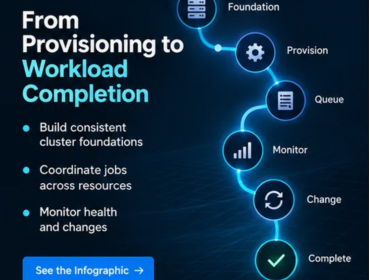
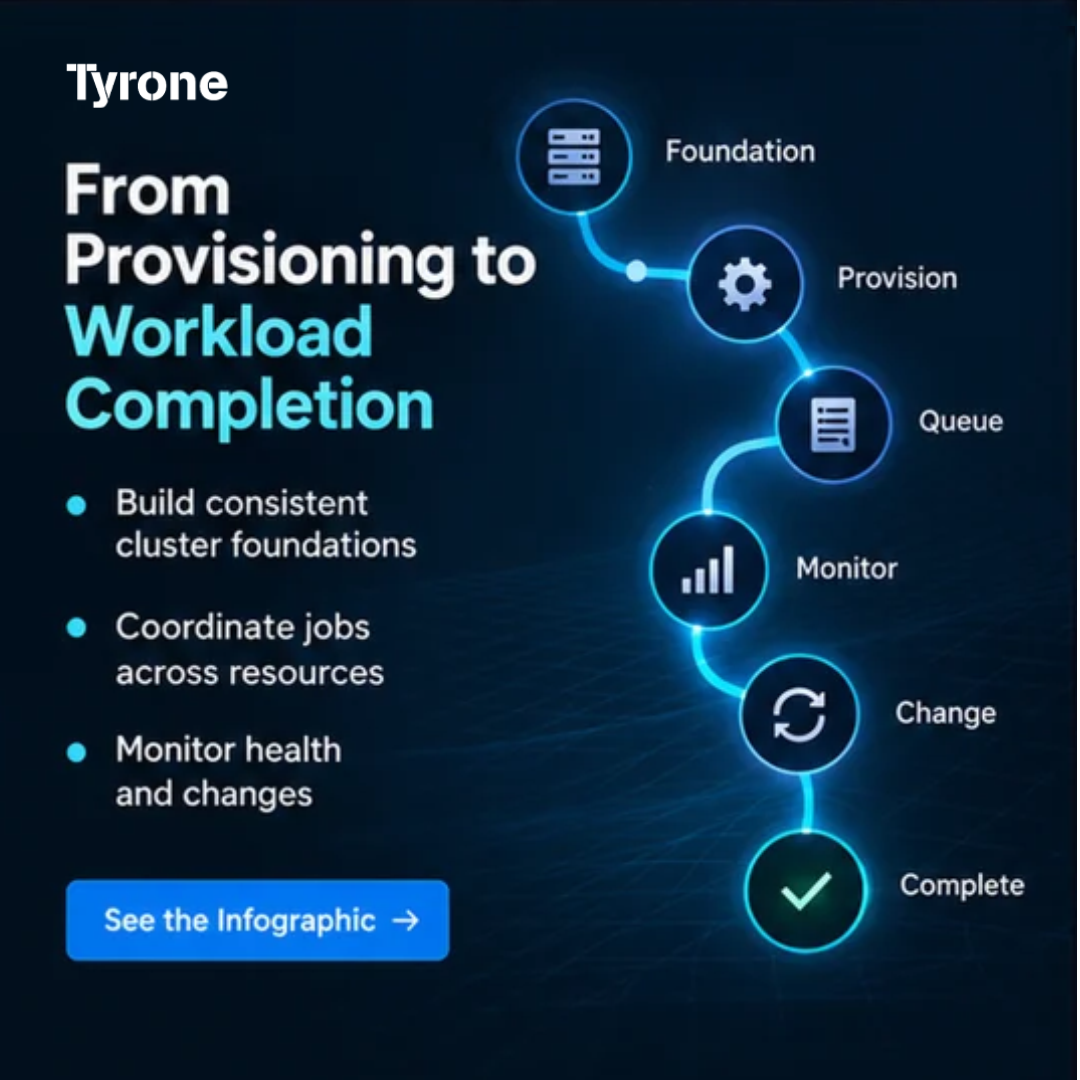
1. Build the Cluster Foundation — The first step is establishing a consistent management environment. Administrators need to discover nodes, configure management services and create a common operating baseline across the cluster. A clear foundation reduces one-off configuration and gives later provisioning, monitoring and workload-management activities a shared control point.
2. Provision Compute Nodes — Raw servers become useful compute only after they are prepared for workloads. Operating systems, required configurations and supporting services need to be deployed consistently across physical or virtual nodes. Repeatable provisioning reduces configuration drift and helps newly added or rebuilt nodes enter the cluster with fewer manual setup steps.
3. Coordinate Workloads — Once compute is available, jobs need a structured path to those resources. Workload coordination places jobs into queues and applies policies across shared capacity so multiple users and applications can coexist. This creates a more predictable operating model than manual allocation and helps teams manage competing demands across the same HPC environment.
4. Monitor Health and Status — Cluster capacity is only valuable when it is healthy and available. Central monitoring gives administrators visibility into node condition, service issues and cluster status without checking systems individually. That makes it easier to identify lost capacity early and understand whether a workload problem is caused by the application, the queue or the infrastructure.
5. Respond to Operational Change — Hardware replacement, maintenance and expansion are normal parts of cluster life. A strong management process should support adding, replacing or reprovisioning nodes without treating each change as a new cluster build. Repeatable operational workflows help teams return capacity to service more consistently and reduce the disruption caused by routine infrastructure changes.
6. Complete the Workload Loop — The final objective is not simply to keep nodes online. It is to turn cluster capacity into repeatable time-to-compute for users and applications. When provisioning, workload coordination and monitoring work together, teams can move from available hardware to completed workloads with fewer operational gaps and clearer accountability across the full job lifecycle. Tyrone Cluster Manager is documented as a web-based HPC cluster management suite with cluster deployment, OS provisioning, workload management, graphical monitoring, node health checks and dynamic node provisioning. TCM Advanced additionally lists a dynamic workload manager and High Availability. Together, those documented capabilities align with the operational chain from cluster preparation through workload completion.
Get in touch info@tyronesystems.com