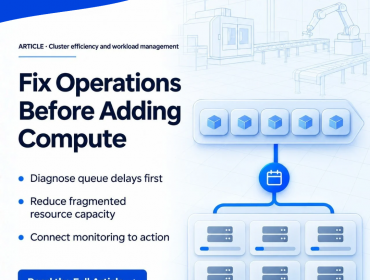
If your users are waiting while parts of the cluster are idle, the problem may not be capacity. It may be how the cluster is being managed.
Why More Hardware Does Not Always Mean More Usable Compute
When users see a long queue, the instinct is often to assume the cluster needs more hardware. Sometimes it does. But queue time can also be created by how existing capacity is provisioned, requested, scheduled and monitored. Before expanding the cluster, teams should check the management bottlenecks that can make available compute difficult to use.
1. Static provisioning — New or rebuilt nodes only improve capacity once they are configured consistently and returned to service. Slow, manual or inconsistent provisioning can leave installed hardware unavailable to the scheduler for longer than necessary. A repeatable provisioning process helps new capacity become operational sooner and reduces the risk of configuration differences creating later workload problems.
2. Unclear queue priorities — Shared HPC environments need rules that reflect urgency, fairness and resource fit. Without clear priorities, workloads can compete in ways that do not match business or research needs. Queue policy should make it easier to understand which jobs run first, which can wait and how specialised resources are assigned when demand is high.
3. Oversized resource requests — Jobs that request more CPUs, memory or accelerators than they actually use reduce scheduling flexibility. The reserved capacity may sit underused while other workloads remain queued. Comparing requested resources with observed use helps application teams right-size jobs and allows the scheduler to place more work onto the same infrastructure.
4. Fragmented resources — A cluster can have free compute and still be unable to start the next job. The available resources may be spread across nodes or may not match the memory, accelerator or topology requirements of the waiting workload. Looking at fragmentation explains why aggregate utilisation can appear moderate even while individual queues continue to grow.
5. Manual administration — Routine operational changes can form their own queue when they depend on a small number of administrators. Access changes, node preparation and repeated configuration tasks all add delay before workloads reach compute. Reducing avoidable manual steps helps operations teams focus on exceptions and prevents administrative dependencies from becoming a hidden capacity constraint.
6. Weak monitoring — Unhealthy or unavailable nodes can quietly reduce effective cluster capacity. If teams do not have a central view of node and service status, lost capacity may only become visible after users report failures or slower queues. Better monitoring helps administrators separate workload demand from infrastructure issues and respond before the problem spreads.
7. No utilisation feedback loop — Workload mixes change over time, so queue rules and resource assumptions should not be treated as permanent. Teams need a regular review of queue wait, resource-request accuracy, idle capacity and administrator effort. That feedback loop helps determine whether the cluster needs policy changes, application tuning or genuinely more hardware. Cluster Management Software supports this review by bringing workload management and operational visibility into one control layer. Tyrone Cluster Manager documents workload management, graphical monitoring, scalable cluster deployment and node health checks, while TCM Advanced adds a dynamic workload manager. The goal is to match available compute with waiting work more efficiently before treating every queue problem as a capacity problem.
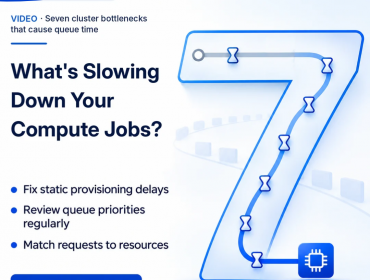
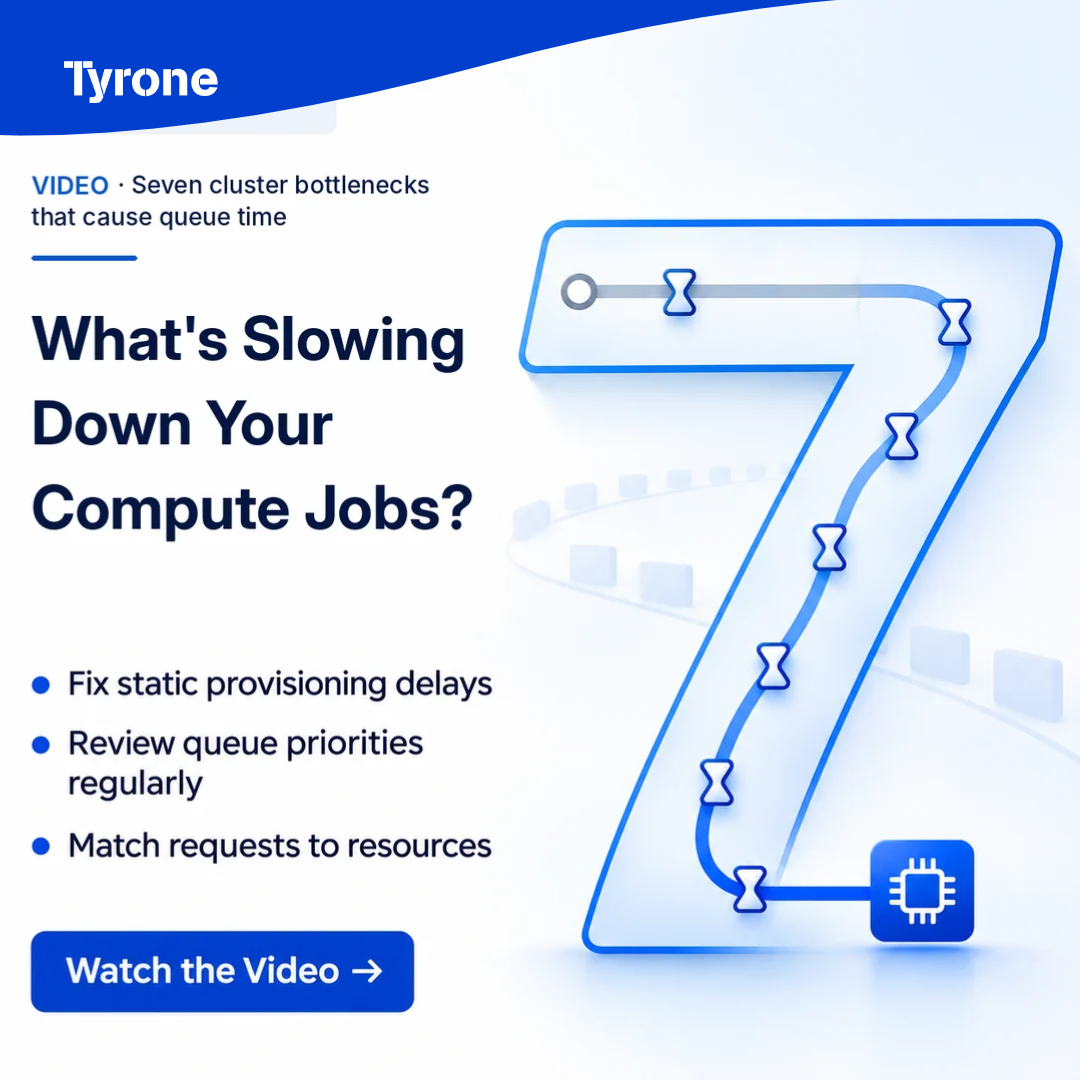
7 Cluster Management Bottlenecks That Turn Compute Capacity Into Queue Time
Queue time is often treated as a hardware problem. But idle resources, oversized requests, manual administration and outdated scheduling policies can all create the same symptom. Here are seven cluster-management bottlenecks worth checking before the next capacity purchase.
Get in touch info@tyronesystems.com