Why Enterprises Are Rethinking Virtual Workspaces for the AI Era
Most enterprise workspace strategies were built for a different way of working.
Employees worked from corporate-managed devices, applications were deployed as on-premises software, and virtual desktop infrastructure (VDI) primarily served as a secure way to enable remote access. Endpoint security, identity and access management (IAM), and network security were designed around a predictable workforce operating within a defined corporate perimeter.
Today’s enterprise looks very different.
Hybrid work is constant. AI workloads are growing rapidly. Contractors and third-party partners need controlled access to enterprise resources. Employees expect seamless experiences across devices, while IT leaders are under pressure to improve operational efficiency, strengthen data loss prevention (DLP), and adopt zero trust architectures without increasing complexity.
The result is a growing mismatch between the way work happens and the way workspaces are delivered.
Many organisations continue to rely on legacy virtual desktop infrastructure, fragmented endpoint security tools, disconnected cloud infrastructure services, and traditional end-user computing models. While these technologies continue to perform their individual functions, they often struggle to support the speed, flexibility, governance, and scalability that modern enterprises require.
This is why the conversation is shifting from simply enabling remote access to reimagining the digital workplace itself.
The question is no longer whether employees can access enterprise applications.
It is whether organisations can deliver secure, role-specific, browser-native virtual workspaces that improve productivity, simplify management, and support AI-ready enterprise operations.
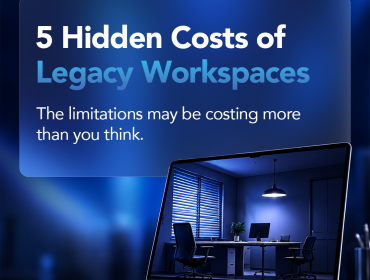
The hidden costs of legacy workspaces are no longer confined to IT.
They now influence productivity, security, infrastructure efficiency, and ultimately, business growth.
1. The Cost of Workplace Friction
Almost every organisation has experienced it.
A new employee joins and waits for access. A contractor is onboarded but cannot begin work until approvals are complete. A project team needs a specialised environment and spends days coordinating with IT.
Individually, these delays may seem minor. Collectively, they create a significant drag on productivity.
The issue is not simply slow provisioning. It is the number of business processes that become dependent on manual intervention. When employees spend their first few days requesting access instead of contributing, the cost is measured in lost momentum, delayed projects, and frustrated teams.
For organisations trying to move faster, workplace friction becomes a growth constraint.
2. The Cost of Infrastructure Waste
Enterprise infrastructure spending continues to rise, yet utilisation often tells a different story.
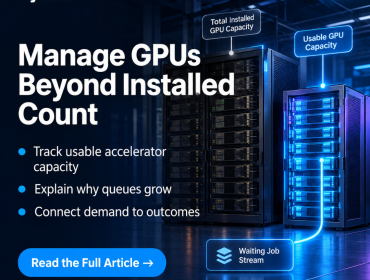
GPU resources remain underused between projects. Compute capacity is allocated for peak demand rather than actual demand. Software licenses are assigned permanently despite being used only occasionally.
The result is a familiar paradox. Teams request more infrastructure while existing resources sit idle.
This challenge is becoming more visible as organisations invest in AI, engineering, analytics, and simulation workloads. The conversation is no longer just about capacity. It is about utilisation.
Infrastructure that cannot be shared, orchestrated, or allocated dynamically often becomes an expensive asset delivering far less value than expected.
3. The Cost of Security and Data Risk
The modern workforce has expanded beyond the traditional employee sitting inside a corporate office.
Contractors, consultants, suppliers, remote workers, and third-party partners now play an essential role in business operations. At the same time, data protection requirements have become stricter than ever.
Yet many workspace environments were designed around assumptions that no longer hold true.
Sensitive information moves between devices. Access privileges accumulate over time. Offboarding processes rely heavily on manual checks. Compliance teams struggle to maintain visibility across a growing number of users and systems.
The challenge is not simply securing the network. It is ensuring that access, data, and activity remain governed regardless of where work takes place.
The financial and reputational impact of a security incident is obvious. The operational effort required to prevent one is often overlooked.
4. The Cost of One-Size-Fits-All Workspaces
Not everyone works the same way.
Developers need specialised environments. Engineers require access to performance-intensive applications. Compliance teams operate under different governance requirements. Contractors need tightly controlled access. Business users simply want to get work done without unnecessary complexity.
Yet many organisations continue to deliver the same workspace experience to every user.
This creates compromises everywhere.
Some users receive more access than they need. Others lack the tools required to be productive. Teams develop workarounds, create duplicate environments, or bypass established processes altogether.
The more diverse the workforce becomes, the harder it is for a generic workspace model to keep pace.
5. The Cost of Complexity
This is perhaps the most underestimated cost of all.
Over time, organisations accumulate technologies to solve specific problems. Virtual desktops. VPNs. Identity platforms. Endpoint management tools. Security controls. Provisioning systems.
Each addition makes sense in isolation.
Together, they often create an ecosystem that is difficult to manage, maintain, and scale.
IT teams spend increasing amounts of time managing integrations, troubleshooting issues, and coordinating across systems. End users encounter inconsistent experiences. New requirements take longer to implement because every change affects multiple layers of technology.
Complexity rarely appears as a line item in a budget.
It appears as slower decision-making, operational overhead, and reduced agility.
And in many organisations, it has quietly become one of the largest barriers to productivity.
Legacy workspaces were designed to solve the challenges of a previous generation of work. The challenge facing enterprises today is not whether those systems still function. It is whether they are equipped to support the way people work now.
The organisations gaining an advantage are not necessarily investing more in workspaces. They are rethinking how workspaces are delivered, secured, managed, and experienced.
Because the true cost of a workspace is not what it costs to run.
It is what it costs the business when it gets in the way of work.
Final Thoughts:
Enterprise work is entering a new phase. AI adoption, hybrid teams, stricter compliance requirements, and increasingly distributed workforces demand more than traditional virtual desktop infrastructure can deliver. They require intelligent workspaces that are secure, adaptive, role-specific, and built for the way modern enterprises operate.
Skylus Workspaces is built around this shift, helping organizations move beyond legacy workspace models to deliver secure, browser-native, AI-ready digital workspaces that improve operational efficiency without compromising governance or user experience.
Join our exclusive launch on 27th November to unlock the potential of your workspace: https://tyronesystems.com/workspace-webinar/