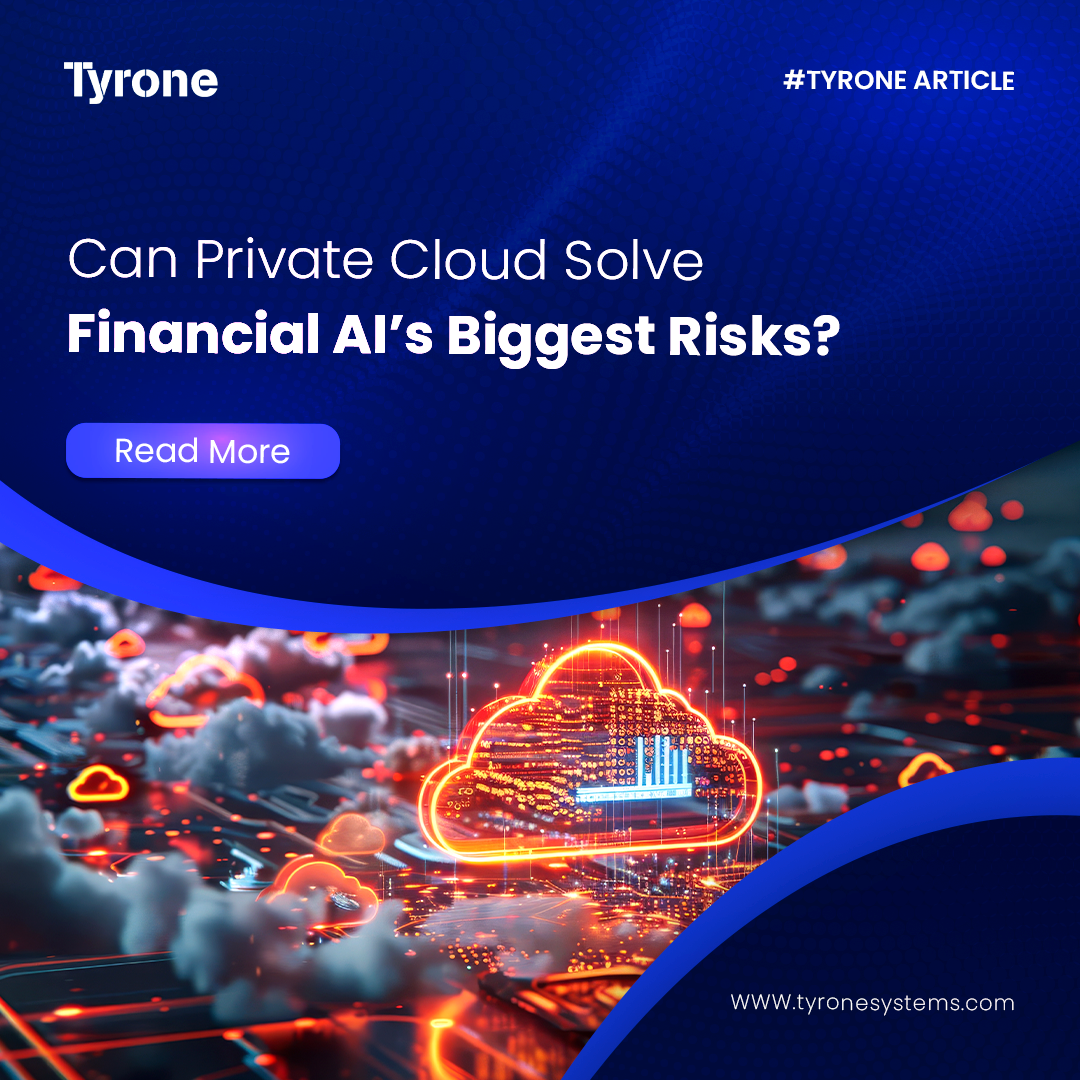
Why Financial LLM Deployments Need a Storage-First Strategy
For banks, insurers, asset managers, and fintech platforms, large language model deployment is not only an AI infrastructure decision. It is a data-control decision. The core question for stakeholders is not “Which model should we use?” but “Where does sensitive data live, move, get indexed, and get retrieved during every AI interaction?”
Financial LLM workloads depend on high-volume, high-sensitivity data: customer records, transaction histories, risk models, contracts, call transcripts, claims, trading research, KYC documents, and internal policy repositories. When this data is used for retrieval-augmented generation, fine-tuning, vector search, or model evaluation, storage architecture becomes the control plane for residency, latency, governance, and auditability.
Generative AI is already changing how banking risk and compliance functions work, while also requiring strong organizational guardrails around its use. For financial institutions, private cloud storage provides the foundation for those guardrails because it keeps regulated data under enterprise-defined controls while still enabling AI-scale performance.
Data Residency: Keep Regulated Data Where It Belongs
Data residency is now a board-level concern. Financial institutions often operate across jurisdictions with different requirements for customer data, operational records, and supervisory access. A public cloud-only model can create uncertainty around where data is stored, replicated, backed up, cached, or processed by managed AI services.
Private cloud storage helps resolve this by anchoring sensitive datasets within specific regions, sovereign facilities, or institution-controlled environments. This is especially important for LLM pipelines where data is not static. Prompts, embeddings, retrieved documents, logs, model outputs, and feedback loops can all become regulated data artifacts.
A stakeholder-ready private cloud architecture should support:
Regional Data Segmentation
Customer and operational data should be stored, indexed, and retrieved within approved jurisdictions. This prevents accidental cross-border movement during AI inference, analytics, or disaster recovery.
Policy-Based Data Placement
Storage policies should automatically classify data by sensitivity, geography, business unit, and regulatory obligation. This ensures that AI workloads consume data from approved locations only.
Sovereign Backup and Recovery
Backups, immutable copies, and disaster recovery replicas must follow the same residency rules as primary datasets. For LLM deployments, this also includes vector databases, metadata stores, and audit logs.

Latency: Bring AI Compute Closer to Financial Data
Latency determines whether an LLM deployment remains a proof of concept or becomes a production-grade business capability. In financial services, AI use cases such as fraud investigation, advisor assist, trading research, claims triage, compliance review, and customer service require fast access to governed data.
The wrong architecture moves data to the model. A better architecture brings model inference and retrieval closer to the data.
Private cloud storage enables low-latency LLM performance by placing high-throughput storage, vector indexes, and inference infrastructure within the same controlled environment. This reduces data movement, avoids unpredictable network hops, and improves response consistency for business-critical workflows.
For stakeholders, this matters because latency is not only a technical metric. It affects employee productivity, customer experience, operational throughput, and the economics of AI at scale. A compliance analyst waiting 12 seconds for every retrieval-augmented answer will not adopt the system. A fraud engine that cannot retrieve transaction context in near real time will not improve risk outcomes.
Compliance: Make Auditability Native, Not an Afterthought
Financial regulators are paying close attention to operational resilience, third-party risk, and technology governance. The EU’s Digital Operational Resilience Act, which has applied since January 17, 2025, is designed to ensure that banks, insurers, investment firms, and other financial entities can withstand, respond to, and recover from ICT disruptions such as cyberattacks or system failures. (Source: EIOPA)
For LLM deployments, compliance depends on proving who accessed what data, where it was processed, how outputs were generated, and whether controls were enforced consistently.
Private cloud storage supports this through:
Immutable Audit Trails
Every prompt, retrieval request, document access, model response, and administrative action should be logged in tamper-resistant storage. This is critical for internal audit, regulator review, and incident investigation.
Granular Access Control
LLM systems should not bypass existing entitlement models. Storage must integrate with identity, role-based access, attribute-based access, encryption keys, and privileged access management.
Retention and Legal Hold
Financial records, AI logs, training datasets, and model evaluation outputs may need defined retention periods. Private cloud storage allows institutions to enforce retention without relying entirely on external service defaults.
Third-Party Risk Reduction
DORA also harmonizes requirements around ICT risk management and third-party risk for financial entities, making infrastructure dependency more visible to supervisors. Private cloud storage gives institutions more control over critical AI data infrastructure while still allowing hybrid integration where appropriate.
The Business Case: Control Risk Without Slowing AI Adoption
Financial institutions do not need to choose between innovation and control. The strongest architecture separates regulated data control from model flexibility. Sensitive data remains in private cloud storage, while approved models access it through governed APIs, retrieval layers, masking services, and policy engines.
This approach supports multiple deployment patterns:
Private RAG for Internal Knowledge
Policies, contracts, research, risk reports, and customer documentation remain in governed storage. The LLM retrieves only authorized content and generates responses with traceable references.
Secure Model Fine-Tuning
Fine-tuning datasets are curated, anonymized, versioned, and stored in controlled environments. This reduces exposure while improving domain-specific performance.
Compliant AI Operations
Model monitoring, evaluation data, prompt logs, and output histories are stored with audit-grade controls, helping compliance teams assess drift, misuse, and policy violations.
One useful risk benchmark: IBM’s 2025 Cost of a Data Breach Report found the global average cost of a data breach was USD 4.44 million (Source: IBM Cost of a Data Breach Report 2025). For financial AI leaders, that figure makes uncontrolled AI data movement more than an IT issue; it is a material business risk.
What Stakeholders Should Prioritize
Financial LLM deployments should be evaluated against five executive criteria: data residency assurance, latency under production load, auditability, integration with existing security controls, and resilience across failure scenarios.
A scalable storage platform for AI and big data should deliver high-throughput object storage, file access for analytics pipelines, vector database integration, encryption, lifecycle management, immutable backups, and policy-based governance. Just as important, it should give risk, compliance, infrastructure, and business teams a shared operating model.

Conclusion: Private Cloud Storage Is the Control Layer for Financial AI
The future of financial LLM deployment will not be defined only by model size or prompt engineering. It will be defined by how safely institutions can connect regulated data to AI-driven workflows.
Private cloud storage allows financial organizations to meet data residency, latency, and compliance requirements at the same time. It keeps sensitive data under institutional control, places AI workloads closer to governed datasets, and creates the audit foundation regulators and boards expect.For stakeholders, the message is clear: scalable storage is not back-end infrastructure. In financial AI, it is the strategic layer that determines whether LLMs can move from experimentation to trusted enterprise deployment.