AI Infrastructure – Introduction
AI infrastructure is now the difference between experimenting with artificial intelligence and converting it into measurable business impact. Indian enterprises are no longer asking whether AI can improve decision-making; they are asking whether their compute, storage, governance and deployment model can support real production use cases. This blog explains how AI infrastructure connects GPU computing, data readiness, security and scalable operating models to the larger impact of artificial intelligence in India.
Why AI impact depends on infrastructure
The impact of artificial intelligence is often discussed through use cases: faster fraud detection, sharper demand forecasting, improved diagnostics, better customer service and accelerated research. But behind every high-performing AI use case is a less glamorous foundation: infrastructure that can move data, train models, serve inference, secure sensitive information and scale without creating operational chaos. For stakeholders, this means AI impact should not be measured only by model accuracy or proof-of-concept speed. It should be measured by how consistently the enterprise can move AI workloads into production and keep them reliable under real demand.
The enterprise AI infrastructure stack
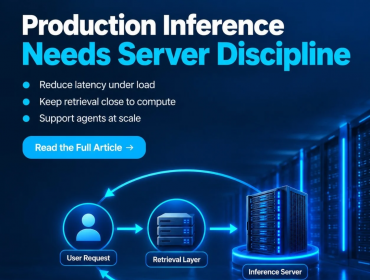
Enterprise AI requires a coordinated stack. GPU infrastructure provides acceleration for training and inference. High-performance storage keeps model pipelines from waiting on data. Networking reduces the latency between data, compute and application layers. AI platforms provide workspace controls so data science, research, engineering and business teams can use shared GPU resources without conflict. Finally, governance decides who can access what, where data can move and how workloads are monitored. Without this stack, enterprises may own expensive hardware but still struggle to deliver AI impact.

India’s shift from AI pilots to production
India’s AI momentum is moving from experimentation to scale. IDC has projected that AI and GenAI spending in India could reach USD 6 billion by 2027 at a CAGR of 33.7% (Source: IDC). The IndiaAI Mission is also expanding access to affordable AI compute, with the official IndiaAI portal announcing 18,000+ affordable AI compute units and up to 40% reduced cost for eligible users (Source: IndiaAI Mission). Together, these signals make one point clear: enterprise AI will increasingly depend on accessible, scalable and locally relevant infrastructure.
Where Indian stakeholders should focus
The most important infrastructure question is not whether to buy more GPUs. It is whether the AI environment is designed for sustained utilization, controlled access and workload diversity. A bank may require private inference for customer intelligence. A manufacturer may need edge-to-core data movement for quality analytics. A university may need governed GPU workspaces for hundreds of students and researchers. A public sector organisation may need data sovereignty and cost predictability. In each case, AI infrastructure has to be shaped around business impact, not around a generic hardware bill of materials.
Infrastructure decisions that create business value
For CIOs, CTOs and business leaders, the practical path is to connect infrastructure design with enterprise outcomes. Faster model iteration reduces time-to-insight. Better GPU utilization improves return on infrastructure investment. Sovereign deployment models strengthen data control. HPC and AI convergence allows organisations to run simulation, analytics and model development on a more unified computing backbone. This is where the conversation shifts from infrastructure cost to infrastructure advantage.
What this means for stakeholders
For stakeholders, the practical implication is that AI infrastructure should be evaluated like a revenue-enabling asset, not an isolated IT purchase. A stronger infrastructure foundation can support faster analytics, more reliable automation, improved customer intelligence and better risk decisions. This also makes budgeting more strategic. Instead of approving fragmented AI tools, leadership can fund a platform that serves multiple teams and use cases over time.
The operating model matters as much as the stack
Many AI programmes fail to scale because the infrastructure operating model is unclear. Who owns GPU allocation? Who approves sensitive data movement? How are experiments moved into production? How is usage measured across teams? These questions are as important as server specifications because they determine whether the organisation can convert capacity into output. A mature AI infrastructure strategy connects platform teams, data teams, security teams and business units around one execution model.
Powering enterprise AI with purpose-built platforms
Tyrone and Netweb offer a portfolio of AI infrastructure solutions designed to support organizations at every stage of their AI journey. Velox delivers high-performance AI infrastructure for model training, inference and large-scale enterprise workloads, while Skylus AI provides GPU-accelerated AI systems and HPC platforms built for demanding AI, analytics and research environments. Together, these solutions enable enterprises to build secure, scalable and future-ready AI ecosystems that maximize infrastructure performance and accelerate business outcomes.
Decision framework for 2026
A useful decision framework is to classify AI workloads by business criticality, data sensitivity, compute intensity and expected scale. This prevents infrastructure teams from overbuilding for low-value experiments or underbuilding for production AI. It also gives stakeholders a clearer way to decide which workloads should use shared GPU Workspaces, which require sovereign controls and which need HPC-class performance.

Conclusion
India’s intelligent future will not be powered by AI models alone. It will be powered by the infrastructure decisions that make those models usable, secure, scalable and economically sustainable. Enterprises that treat AI infrastructure as a strategic foundation will be better positioned to convert enterprise AI ambition into measurable AI impact. For stakeholders, the next competitive advantage is not just adopting AI; it is building the infrastructure that lets AI perform at scale.
Quick Comparison Table
| Infrastructure Layer | Business Role | Impact on AI Outcomes |
| GPU Computing | Accelerates training and inference | Shortens model development and deployment cycles |
| AI Storage | Feeds large datasets into AI pipelines | Reduces bottlenecks and improves workload continuity |
| Networking | Connects compute, data and users | Improves latency, throughput and collaboration |
| AI Platform | Manages workspaces, access and utilization | Improves governance and GPU ROI |
| Sovereign Controls | Keeps sensitive data within approved environments | Supports compliance and enterprise trust |
FAQ
What is AI infrastructure?
AI infrastructure is the compute, storage, networking, software and governance layer that enables organisations to develop, deploy and scale AI workloads efficiently.
Why does AI impact depend on infrastructure?
AI impact depends on infrastructure because AI models require reliable access to data, GPUs, storage, networking and deployment controls to deliver consistent, scalable and measurable business outcomes.
How is enterprise AI different from AI pilots?
Enterprise AI is designed for production use with governance, scalability, security and cost efficiency across multiple teams, whereas AI pilots are limited experiments that validate concepts before broader deployment.
Why is AI infrastructure important in India?
AI infrastructure is important in India because increasing enterprise AI adoption, the IndiaAI Mission and digital transformation initiatives require scalable, secure and cost-effective computing infrastructure to support AI innovation.