The gap between AI ambition and AI impact is infrastructure.
Indian enterprises are embracing AI at an unprecedented pace. Yet as adoption accelerates, a structural reality is emerging: most enterprises do not have an AI problem. They have an infrastructure problem that AI has exposed. Data sits scattered across systems never designed to communicate. GPU clusters remain chronically underutilized — not because workloads don’t need the compute, but because infrastructure architectures create bottlenecks, fragment resources, and lock capacity into inefficient allocations. Infrastructure constraints, not algorithm limitations, have become the primary barrier to AI impact.
The IndiaAI Mission is rewriting this equation. With significant national investment in sovereign compute capacity and thousands of GPUs already onboarded at subsidised rates, India is building one of the world’s most ambitious sovereign AI infrastructure programs. This is not just about compute — it is about data sovereignty, enterprise scalability, and HPC infrastructure that can power India’s intelligent future from the ground up.
But infrastructure without strategy is just hardware. For CIOs leading this transformation, seven decisions will determine whether AI investments deliver measurable business outcomes or remain trapped in the gap between pilot and production.
Decision 1: Start With Workload Reality
Map training, inference, analytics and simulation requirements before choosing infrastructure.
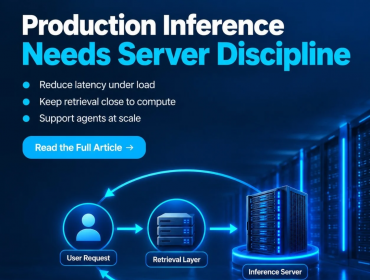
The most common infrastructure mistake is treating all AI workloads identically. Training a large language model demands sustained throughput, with GPUs running at peak utilization for days or weeks. Inference, by contrast, is a continuously available service that must respond in milliseconds — and it is rapidly becoming the workload reshaping infrastructure investments as organisations move beyond pilots into production-scale deployments. Analytics and simulation workloads have their own distinct I/O patterns and performance requirements.
CIOs must begin by asking: What are we actually building? A real-time fraud detection system demands different infrastructure than a research lab training foundational models on sovereign datasets. A manufacturing simulation workload requires HPC-class parallel file systems. A customer-facing chatbot needs low-latency inference with high availability.
The IndiaAI Mission’s compute expansion is designed to support this diversity of workloads. High Performance Computing (HPC) architectures excel at simulation and model training. GPU computing optimized for inference delivers the responsiveness that customer-facing AI demands. Understanding workload characteristics is the prerequisite for every subsequent decision.
Action: Audit your AI portfolio by workload type. Quantify throughput, latency, and concurrency requirements for each. Match infrastructure choices to workload profiles, not vendor narratives.
Decision 2: Prioritise GPU Utilization
AI impact improves when expensive GPU resources are allocated and monitored intelligently.
Every idle GPU represents sunk capital, delayed experiments, and slower time to market. Yet across enterprise AI deployments, GPU utilization remains stubbornly low — not because workloads don’t need the compute, but because infrastructure architectures create bottlenecks, fragment resources, and lock capacity into inefficient allocations.
The fundamental problem is structural: native orchestration tools often assign whole physical GPUs to individual pods, creating fragmentation that strands capacity. Most AI workloads don’t need an entire GPU — they need a percentage of available compute, running continuously. Technologies like Multi-Instance GPU (MIG) and time-slicing address this by enabling multiple AI tasks to run simultaneously on isolated slices, improving utilization and supporting secure multi-tenant AI workloads.
For Indian enterprises operating under the IndiaAI Mission’s sovereign compute framework, utilization is not just an efficiency metric — it is a strategic imperative. The mission’s GPU infrastructure represents a national investment; maximizing its productive use accelerates the entire AI ecosystem.
Action: Instrument your GPU clusters to measure true utilization — not just allocation. Implement workload consolidation strategies. Consider GPU partitioning technologies to eliminate fragmentation. Set utilization targets and monitor progress monthly.
Decision 3: Design for Data Movement
Storage and networking must keep AI pipelines moving without avoidable latency.
AI workloads are data-hungry by nature. A single training epoch may read terabytes of data sequentially. Checkpoint writes can consume hundreds of gigabytes. Data preprocessing pipelines shuffle billions of files. When storage or networking cannot keep pace, GPUs sit idle — a condition known as I/O starvation.
The infrastructure must be designed for data movement, not just data storage. This means deploying AI Storage Solutions with parallel file systems capable of delivering sustained throughput to thousands of GPUs simultaneously. It means creating a data architecture that supports the entire AI pipeline — from raw ingestion to preprocessing to training to inference — without data copying or staging delays.
For enterprises building Sovereign AI Infrastructure, data movement must also respect jurisdictional boundaries. India’s sovereign compute expansion — including the deployment of next-generation GPUs and exascale-class national AI supercomputers — is designed to keep data within national borders while delivering world-class performance.
Action: Map your data pipeline end-to-end. Identify every point where data waits or moves between systems. Invest in parallel file systems and high-throughput storage before adding more GPUs.
Decision 4: Separate Training and Inference
Both need different performance, governance and availability models.
Training and inference are not the same workload. They should not share the same infrastructure.
Training is a batch process — resource-intensive, time-bound, and tolerant of occasional interruptions. Inference is a service — continuously available, latency-sensitive, and mission-critical. As enterprises move beyond generative AI pilots into production-scale deployments, inference is rapidly becoming the workload reshaping infrastructure investments.
Running both on the same infrastructure creates conflicts. Training jobs can starve inference workloads of resources. Inference latency spikes can disrupt training checkpointing. The governance requirements differ — training data may have different compliance obligations than inference data.
Action: Establish separate infrastructure pools for training and inference. Define clear handoff protocols for model promotion. Consider inference-specific optimizations like model quantization and caching.
Decision 5: Build for Sovereign Control
Sensitive data workloads need clear rules around location, access and auditability.
Data sovereignty is no longer a compliance checkbox — it is a strategic imperative. With nationwide sovereign compute expansion underway, India is building domestic AI capabilities to reduce reliance on foreign ecosystems for critical workloads. Sovereign cloud deployment is increasingly required for AI systems processing sensitive data in sectors like judiciary, healthcare, and financial services.
For CIOs, this means building Sovereign AI Infrastructure with clear rules for data location, access controls, and auditability. It means deploying open-weight foundational models within sovereign data centers. It means ensuring that the control plane — not just data storage — remains within jurisdictional boundaries. Indian enterprises and regulated sectors are seeking data residency and compliance under Indian jurisdiction.
Action: Audit your data inventory by sensitivity and jurisdiction. Define clear sovereignty requirements for each workload category. Prioritize sovereign infrastructure for sensitive and regulated workloads.
Decision 6: Measure Infrastructure ROI
Track time-to-provision, utilization, model cycle time and production conversion.
Infrastructure is not an end — it is a means. The ROI of AI infrastructure must be measured in business outcomes, not hardware metrics. Yet many organisations are investing in AI without careful evaluation or ROI analysis.
The metrics that matter: Time-to-provision — how long from request to usable infrastructure? GPU utilization — what percentage of accelerator capacity is productively used? Model cycle time — how long from experiment start to production deployment? Production conversion — what percentage of experiments become production workloads?
The IndiaAI Mission’s subsidised compute model — making GPUs available at accessible rates — creates a unique opportunity to measure ROI at scale. Enterprises can leverage this infrastructure to accelerate experimentation while building their own production infrastructure for mission-critical workloads.
Action: Implement infrastructure observability from day one. Establish baseline metrics for your current state. Set improvement targets for each metric. Review quarterly.
Decision 7: Scale With Business Outcomes
AI infrastructure should grow with measurable enterprise value, not isolated experiments.
The final decision is the most important: infrastructure must scale with business outcomes, not with experiment counts.
Isolated pilots create isolated infrastructure. When every team provisions its own GPU resources, fragmentation and underutilization follow. When infrastructure grows without business alignment, costs escalate without corresponding value.
The alternative is outcome-driven scaling: infrastructure expands only when it enables measurable business outcomes. A successful fraud detection model that reduces losses justifies additional compute. An experiment that never reaches production does not.
Indian enterprises are ahead of the global curve in this regard — the country ranks among the top nations for at-scale AI deployment. But priority must translate to discipline. Infrastructure decisions must be tied to business case approval, not technical enthusiasm.
Action: Require a business case for every infrastructure expansion. Tie infrastructure investment to specific outcome metrics. Review infrastructure ROI quarterly and sunset underperforming investments.
From Infrastructure to Impact
The IndiaAI Mission is building one of the world’s most ambitious sovereign AI infrastructure programs — with thousands of GPUs, significant investment, and a clear roadmap for national compute expansion. But infrastructure alone does not create impact. Impact comes from intentional decisions: mapping workloads to infrastructure, maximizing utilization, designing for data movement, separating training from inference, building for sovereign control, measuring ROI, and scaling with business outcomes.
For Indian CIOs, the opportunity is unprecedented. India’s AI workloads are projected to grow at a robust pace through the decade, with national compute demand accelerating rapidly. The question is not whether to invest in AI infrastructure. The question is whether to invest with strategy or without it.
Get in touch info@tyronesystems.com