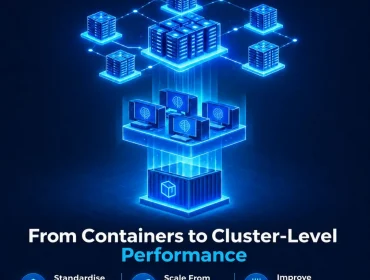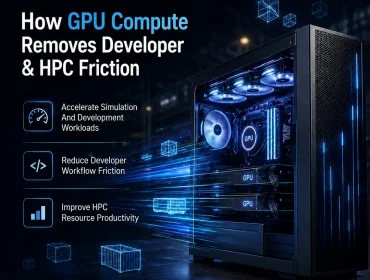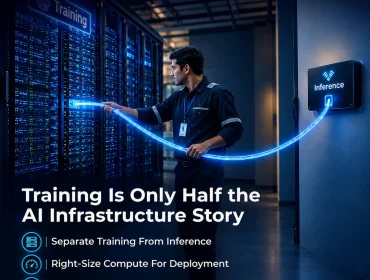
Compute, GPU, storage, networking and scheduling as one enterprise innovation stack
Modern HPC infrastructure is no longer limited to scientific laboratories. It is becoming an enterprise layer for AI, simulation, analytics and industrial workloads. As organisations handle larger datasets and more complex models, High Performance Computing (HPC) provides the coordinated infrastructure needed to solve problems that standard compute environments cannot support efficiently.
Compute sets the base of the HPC stack. CPU and GPU nodes provide the processing power behind complex workloads, from scientific modelling and simulation to AI training and inference. GPU acceleration is especially important when enterprises need faster model iteration, parallel processing and reduced computation timelines. But compute alone is not enough.
Storage sustains performance by keeping large datasets available for AI and simulation pipelines. When storage is slow or poorly matched to workload needs, compute resources wait and the full environment underperforms. Networking reduces friction by helping clusters operate as one coordinated system. Low-latency communication between compute nodes, storage and applications is essential for distributed workloads. Scheduling completes the stack by improving utilization across shared infrastructure. Workload management ensures that the right projects access the right resources at the right time. When compute, GPU, storage, networking and scheduling work together, HPC becomes innovation infrastructure. It helps enterprises move faster from computation to business value, supporting scientific research, engineering, financial modelling, AI development and industrial transformation.
Get in touch info@tyronesystems.com