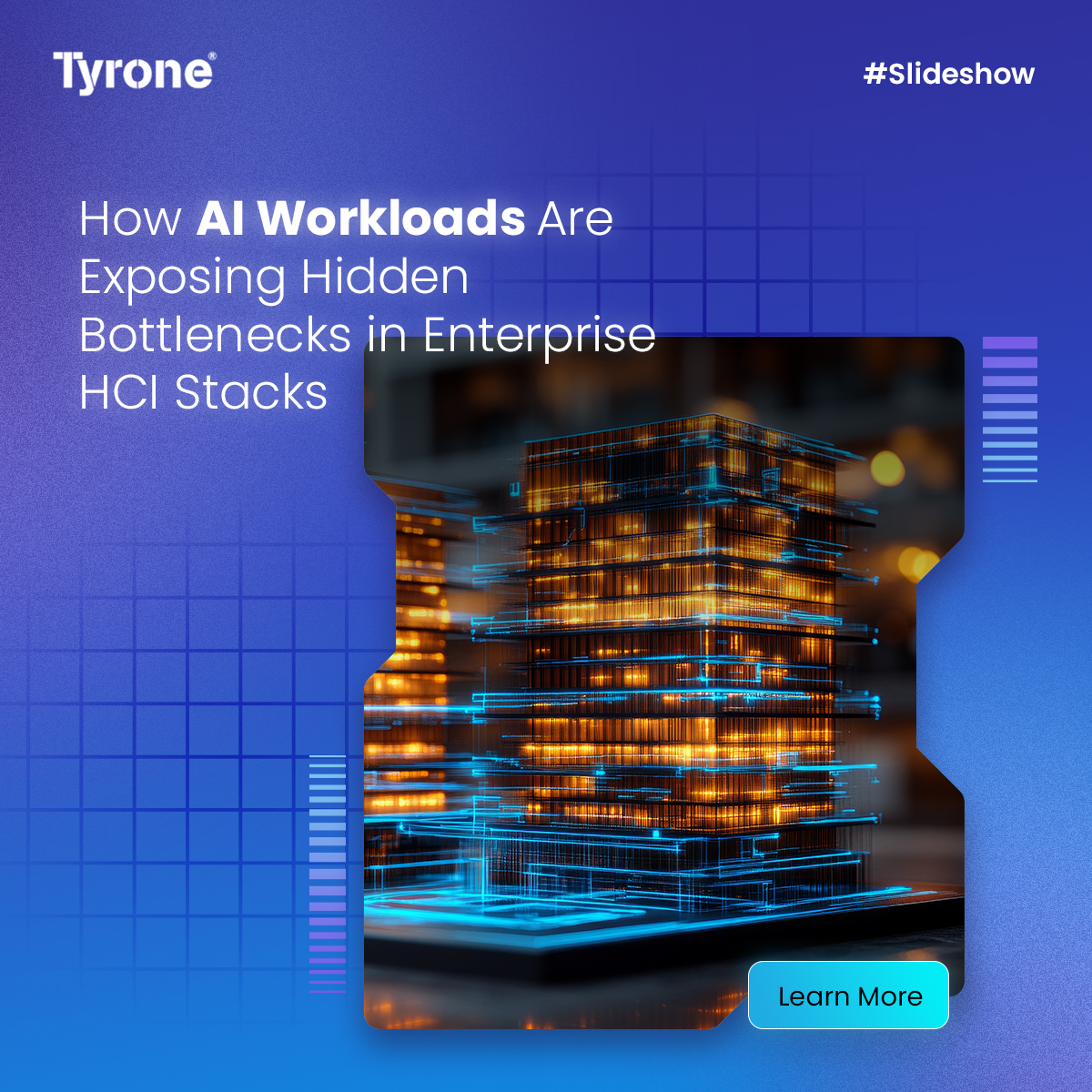
Enterprise hyperconverged infrastructure (HCI) has long been celebrated for its simplicity—elegantly consolidating compute, storage, and networking into a single, scalable appliance. But the explosive arrival of AI workloads, with their voracious demand for GPU-accelerated processing and unpredictable, high-throughput data flows, is placing unprecedented strain on these systems. This is especially pronounced in India’s rapidly digitizing market, where a surge in AI adoption in sectors like fintech, healthcare, and e-commerce is testing the limits of traditional HCI for AI workloads in India. What was once a seamless, general-purpose platform is now revealing critical bottlenecks: choked I/O paths unable to feed data to hungry GPUs, network backplanes buckling under all-to-all communication patterns, and management layers ill-equipped for the ephemeral, containerized nature of AI development. These limitations are forcing IT leaders to confront a stark reality—the very architectures that streamlined operations for virtual desktops and databases may be fundamentally misaligned with the future of intelligent computing. This video delves into the specific pressure points where AI exposes HCI’s weaknesses and explores the architectural shifts—from composable disaggregation to AI-native storage protocols—that are emerging as the true foundations for enterprise AI readiness.
Get in touch info@tyronesystems.com