Why accelerated computing needs usable workflows, not just raw performance
AI and HPC productivity begins with access. A powerful system that is difficult to use can still slow teams down. Developers, researchers and engineers need accelerated computing that connects naturally with their daily workflows.
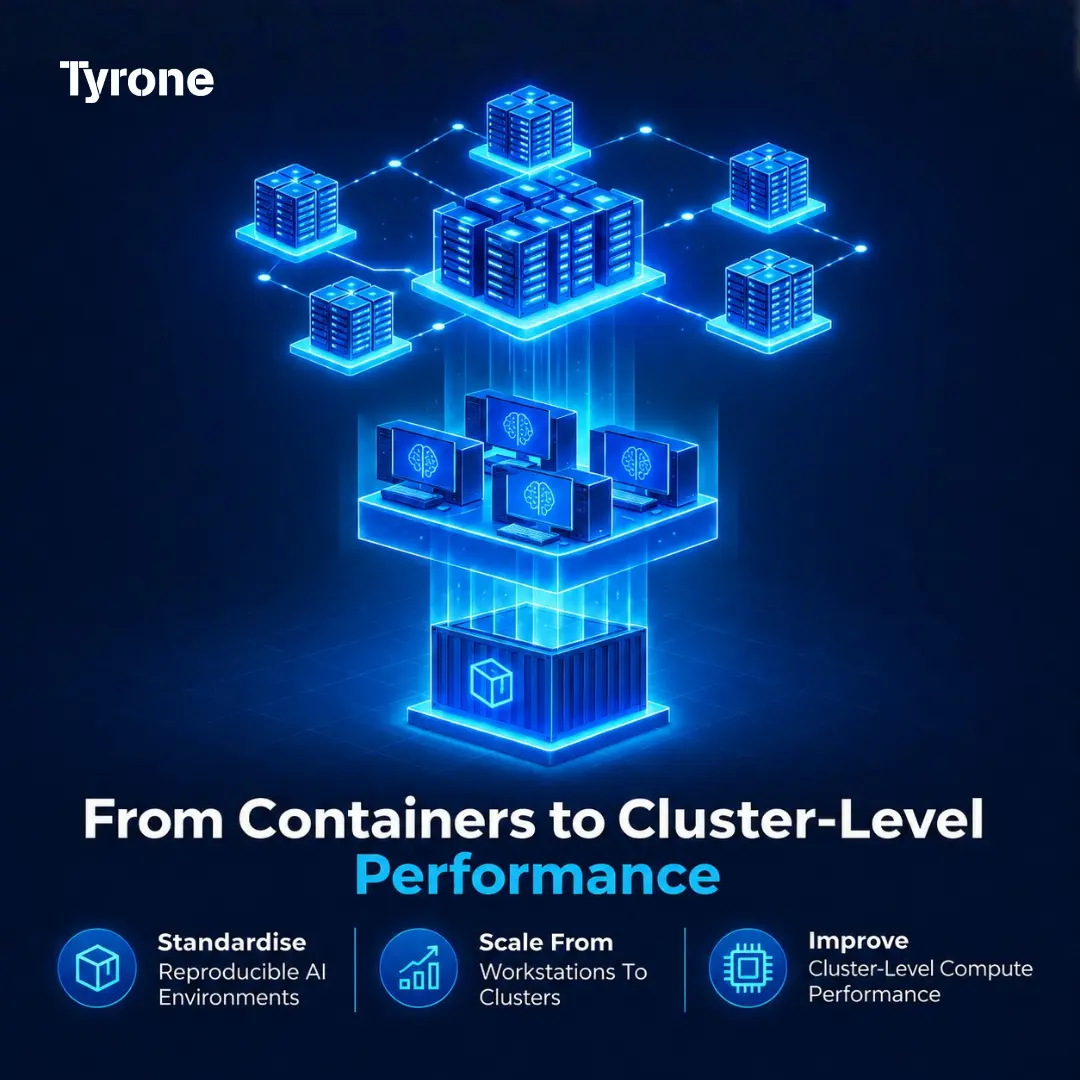
The first layer is containerisation. GPU-accelerated containers help standardise frameworks, libraries and runtime environments. This makes workloads easier to reproduce and reduces the setup issues that often slow research cycles.
The second layer is workstation-level acceleration. Local GPU access helps developers test ideas faster and reduce dependence on shared cluster queues for every experiment. This is especially useful when teams are exploring models, tuning code or validating early simulations.
The third layer is cluster-level performance. As workloads grow, teams need the ability to move from desktop iteration to larger GPU clusters. This supports heavier AI training, simulation, visualisation and HPC workloads without forcing a complete change in workflow logic.
Monitoring and utilisation visibility create the next layer. Infrastructure teams need to see how resources are being used, where bottlenecks appear and when capacity should be expanded. Developers benefit when the system is predictable and responsive. The final outcome is faster output. When containers, workstations, clusters and visibility work together, GPU-optimised computing becomes a productivity stack. It helps teams spend less time managing infrastructure and more time creating results.
Get in touch info@tyronesystems.com