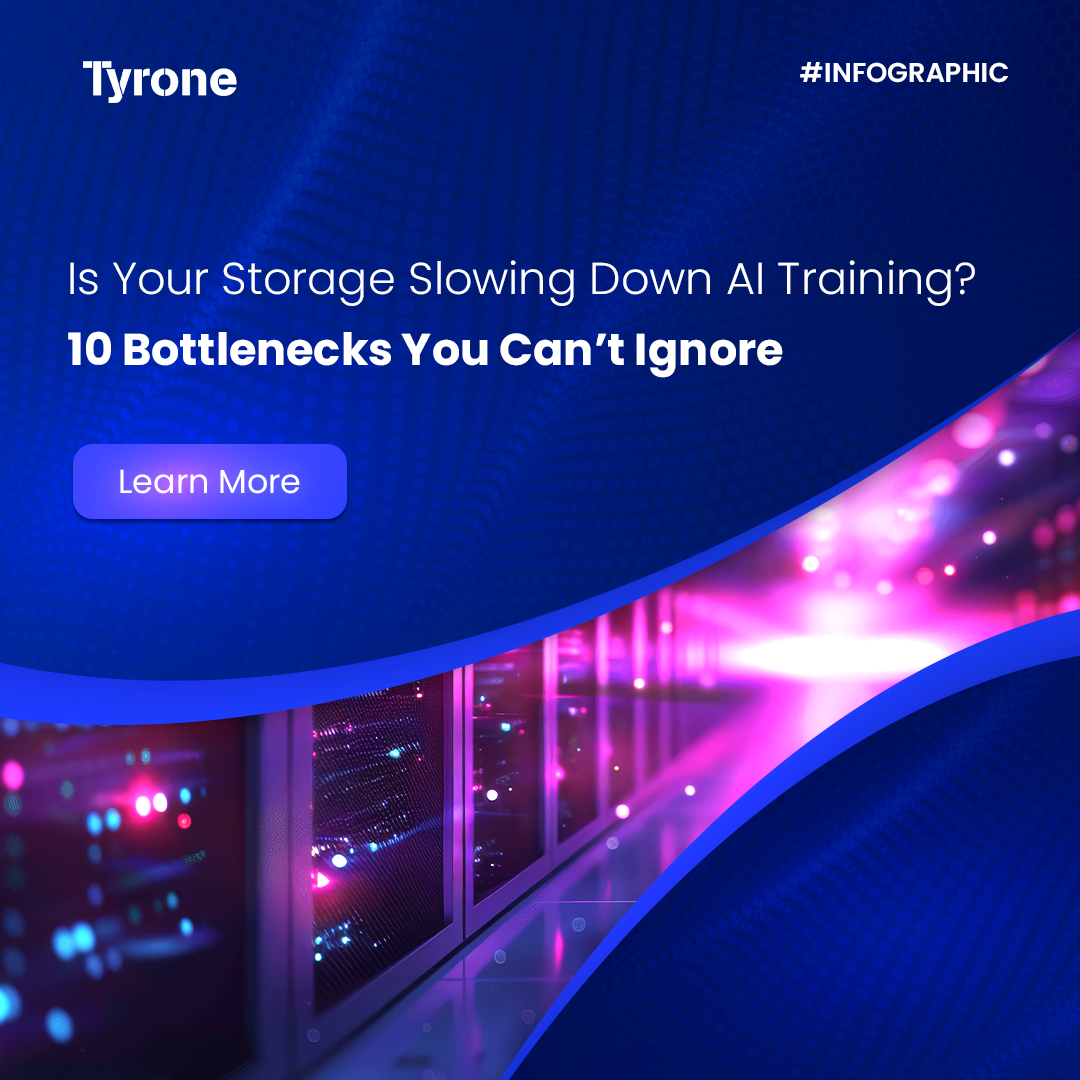
Your GPU cluster is a performance monster—on paper. But in reality, those expensive accelerators spend more time waiting for data than crunching tensors. The culprit isn’t compute; it’s storage. Across thousands of enterprise AI deployments, the same bottlenecks surface again and again: metadata storms from billions of small files, checkpoint write delays that stall training for minutes, network contention mixing data and storage traffic, POSIX lock contention under concurrent access, and the silent killer—lack of a Global namespace that forces painful data shuffling between silos. Each bottleneck not only wastes GPU cycles but also drains data scientist productivity and inflates cloud egress bills. The solution lies in a purpose-built Scalable storage architecture that treats AI workloads as first-class citizens. By deploying a Parallel file system for enterprise, organizations can eliminate I/O contention, deliver high-throughput streaming to thousands of GPUs, and unify data across edge, core, and cloud. Whether you need an AI data storage solution for LLM training, a Big data storage solution for petabyte-scale analytics, or an HPC storage solution for simulation-coupled AI, the Best storage solution for AI workloads is one that systematically removes each bottleneck rather than shifting it elsewhere. This infographic counts down the ten most common storage killers in AI training pipelines—from POSIX compliance traps to checkpoint fragmentation—and provides actionable strategies to eliminate each one, transforming your GPU cluster from data-starved to data-saturated.
Get in touch info@tyronesystems.com