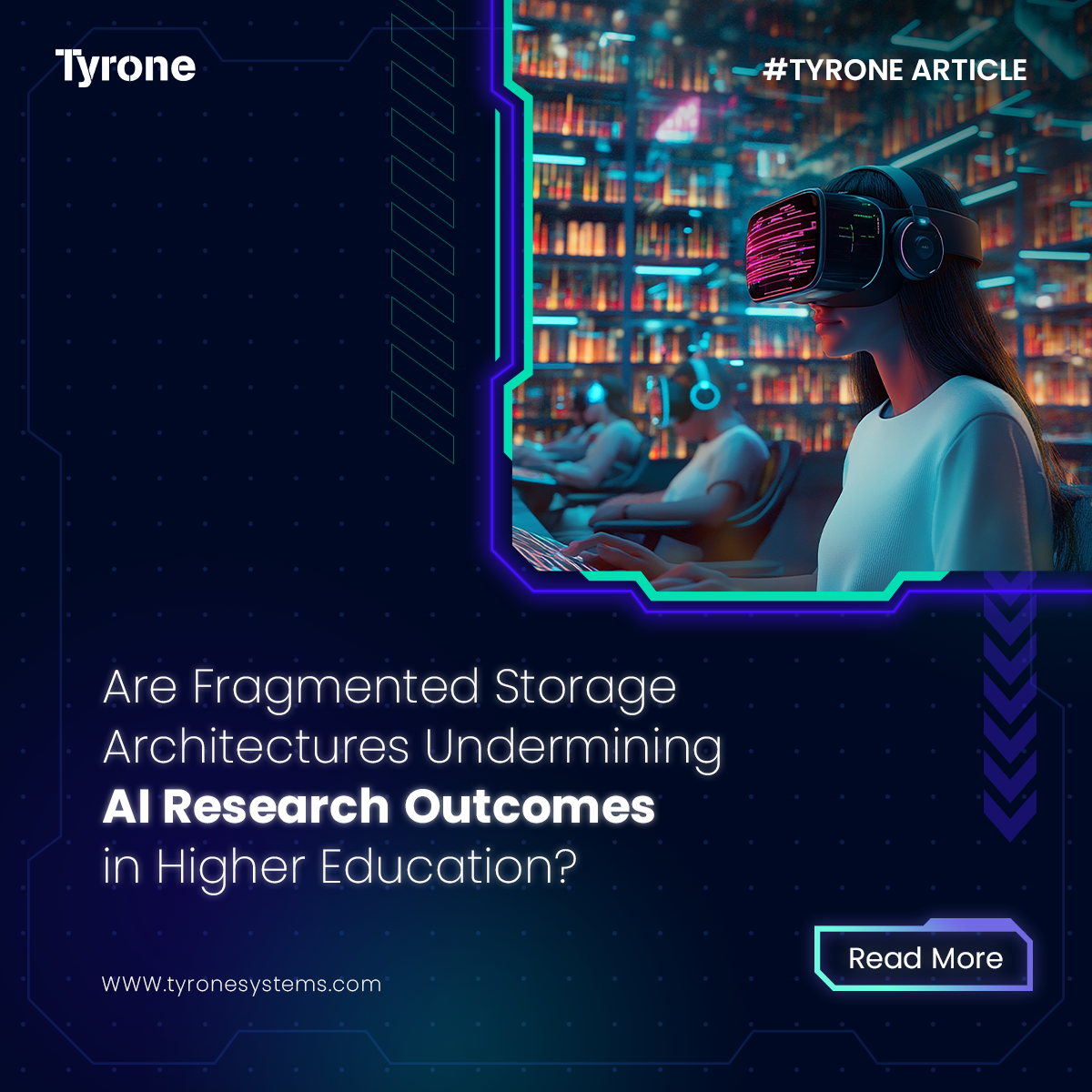
Why Integrated Storage Solutions Are Mission-Critical for the Future of Academic AI
Higher education institutions are embracing artificial intelligence (AI) not as a future add-on, but as a core research competency across disciplines, from computational biology and climate modeling to human-machine interaction. However, there’s a hidden infrastructure challenge that threatens to slow or even derail these efforts: fragmented storage architectures.
When AI workloads are starved of unified, high-performance, and scalable storage systems, research outcomes suffer, and stakeholders across universities, funding bodies, and IT leadership must recognize that the architecture of storage is now as consequential as the models themselves.
The Rising Stakes: AI’s Demands on Data Infrastructure
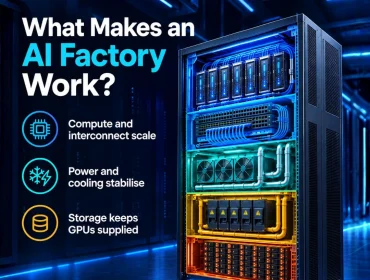
Modern AI research isn’t incremental; it’s data-intensive, iterative, and unpredictable. Unlike traditional enterprise applications, which generate predictable, sequential I/O patterns, AI workloads involve massive parallel access, random read/write patterns, and microsecond-level latency requirements. When storage architectures are fragmented into isolated silos or legacy systems, these demands cannot be met. As industry analyses confirm: “when data can’t reach GPUs fast enough, even the most powerful accelerators underperform,” and storage becomes the number one bottleneck limiting training speed and analytics throughput.
From a strategic viewpoint, the implications are stark. Gartner predicts that through 2026, organizations will abandon 60% of AI projects that aren’t supported by AI-ready data practices, of which fragmented or siloed storage is a fundamental cause. (Source: Gartner) In a competitive academic ecosystem where securing grants, publishing first, and attracting top students and faculty hinge on speed and accuracy, such abandonment rates could materially impact institutional reputation and funding outcomes.

What Fragmented Storage Architecture Looks Like in Academia
In many universities and research labs, storage environments have evolved incrementally from legacy systems: local NAS units, departmental arrays, institutional SANs, and multiple cloud buckets. Each storage island often serves a specific group or workload with its own management and performance constraints.
This fragmentation manifests in several harmful ways:
1. Performance Bottlenecks and Compute Starvation
AI research workflows often span pre-processing, training, validation, and inferencing, each stage requiring high throughput and low latency. Fragmented storage triggers bottlenecks because research compute (GPUs/TPUs) must often wait for data retrieval from slow, isolated sources. Legacy systems optimized for transactional or backup workloads simply weren’t built for parallel, chaotic AI I/O patterns. This “starvation” limits the speed and frequency with which models can be iterated, directly undermining research productivity.
2. Data Silos That Hinder Collaboration and Reuse
Academic AI research thrives on collaboration across labs and institutional boundaries. Yet when data is trapped in isolated storage silos with incompatible access protocols and metadata conventions, reuse and cross-disciplinary innovation falter. Researchers waste time on data wrangling rather than experimentation, slowing discovery cycles and raising total cost of research.
3. Fragmented Metadata and Governance Pain Points
Effective AI research isn’t just about storing bits, it’s about knowing what those bits mean, where they came from, and how they’ve been processed. Fragmented storage typically lacks unified metadata and governance frameworks, resulting in inconsistent data quality, duplication, and poor reproducibility, all critical issues for research rigor.
Why Integrated Storage Solutions Offer a Superior Path
An integrated storage architecture, whether converged, scale-out, or distributed with a global namespace, addresses these challenges holistically.
Unified Namespace and Consistent Data Access
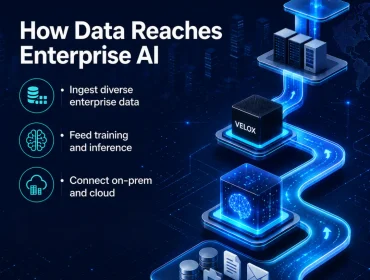
With an integrated system, all research data resides under a single logical structure. Researchers and AI pipelines access data via POSIX, S3, or other protocols without needing to know its physical location. This eliminates translation layers and performance penalties that plague siloed systems, enabling seamless data sharing and model training across teams.
Performance at Scale
Modern integrated architectures are engineered for AI’s unique I/O patterns, high parallel loads, random reads, and metadata-intensive workflows. By eliminating artificial bottlenecks between storage and compute, integrated systems sustain throughput at the scale required for modern research. They also support dynamic scaling as data volumes surge over time.
Enhanced Data Governance
Research compliance and reproducibility increasingly demand strong metadata tracking, version control, and lineage. Integrated storage systems facilitate centralized governance policies and automated metadata capture, reducing risk and empowering institutions to meet regulatory, ethical, and publication standards more robustly.
Reduced Operational Overhead
Fragmented storage environments create operational complexity: separate backups, disparate security policies, and fragmented monitoring tools. A unified solution simplifies administration, reduces overhead, and enables centralized security and compliance, a critical advantage for resource-constrained academic IT teams.
Strategic Implications for Higher Education Stakeholders
For CIOs and IT Leadership
Investing in integrated storage isn’t a peripheral IT upgrade; it’s core research infrastructure. Based on broader infrastructure trends, global data center capacity is expected to nearly triple by 2030, with around 70% of that growth driven by AI workloads, a direct indication of rising storage demands. (Source: Okoone) Institutions that fail to modernize risk stranded compute assets and underutilized hardware.
For Research Deans and Faculty
Fragmented storage imperils research velocity and reproducibility. Integrated architectures enable richer data sharing, more experiments in less time, and repeatable research outcomes, accelerating breakthroughs and improving competitive positioning for grants and partnerships.
For Funders and Policy Makers
Funding agencies increasingly evaluate institutional readiness for AI and data-intensive research. Demonstrable storage maturity can strengthen grant proposals and align institutions with broader digital infrastructure strategy imperatives.

Conclusion
Fragmented storage architectures are not mere technical inconveniences; they are systemic barriers to academic productivity, collaboration, and research excellence. As AI continues to reshape the research landscape, integrated storage solutions are not optional, they are foundational. Stakeholders must align budgeting, policy, and infrastructure planning to ensure that data flows, not fragments, are powering tomorrow’s discoveries.In doing so, universities can unlock the full potential of AI research, faster, more collaborative, and more impactful than ever before.