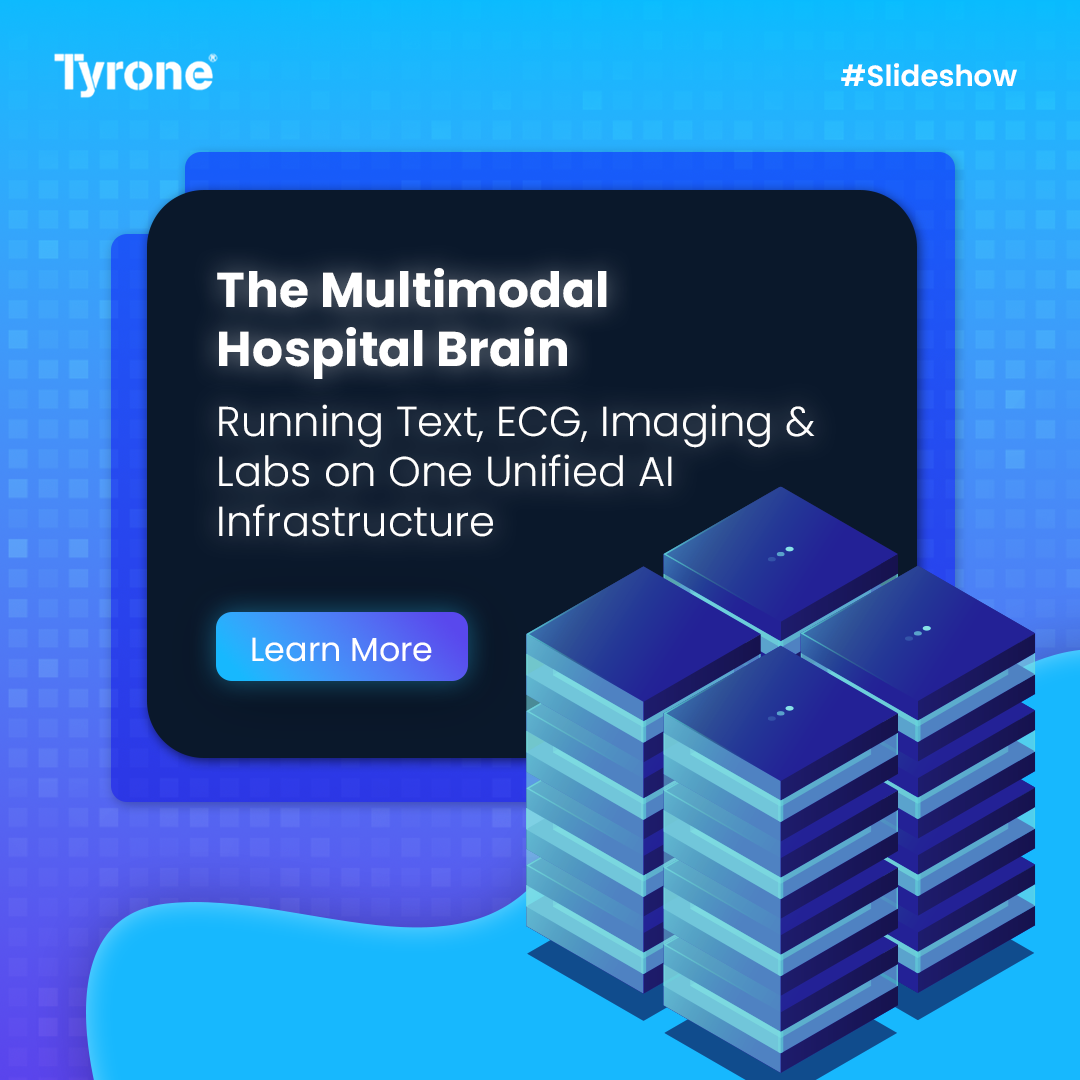
Within a single patient’s journey, critical data streams in from all directions: a doctor’s narrative note, a wavy line on an electrocardiogram, a high-resolution MRI scan, and a column of biomarkers from the lab. Each of these data types—text, signal, image, and structured numeric—has traditionally been siloed, analyzed by separate, narrow AI tools that fail to capture the holistic clinical picture. The next frontier in healthcare AI is the creation of a unified “hospital brain”: a single, cohesive AI infrastructure capable of ingesting, fusing, and interpreting these multimodal streams simultaneously. This system can correlate a subtle anomaly in an echocardiogram with a cryptic phrase in an old progress note and an elevated lab value to flag a brewing condition long before it becomes a crisis. This architectural revolution is powered by orchestrated clusters of specialized AI servers, each optimized for different data modalities yet unified by intelligent software. This post explores the architectural revolution enabling this multimodal intelligence, from orchestrating GPU-accelerated pipelines for disparate data types to implementing cross-modal fusion models that find meaning at the intersection of vision, language, and time-series signals, promising a future where AI doesn’t just analyze a chart but truly understands a patient.
Get in touch info@tyronesystems.com