How HPC infrastructure turns scalable computing into measurable enterprise AI impact
The biggest challenge in enterprise AI isn’t building models, it’s building the infrastructure that can scale them. AI factories rely on computational clusters, GPU computing, high-performance storage, low-latency networking, workload management and governance working together as one operating foundation. As enterprises move from isolated AI experiments to repeatable AI production, HPC infrastructure becomes central to the way AI capacity is planned and delivered.
Computational clusters create the capacity needed for advanced AI, simulations and scientific computing. They allow demanding jobs to run across coordinated compute resources, improving throughput and reducing the time required for complex workloads. HPC adds discipline to this environment through scheduling, parallel processing and workload management, making compute more predictable for multiple teams and projects. AI needs throughput at every stage. Model training, inference, analytics and simulation all require infrastructure that can handle scale without constant bottlenecks. Storage feeds the AI factory by keeping large datasets available to pipelines, while networking connects distributed systems into one coordinated environment. Without strong storage and networking, even powerful clusters can underperform because data movement becomes the limiting factor.
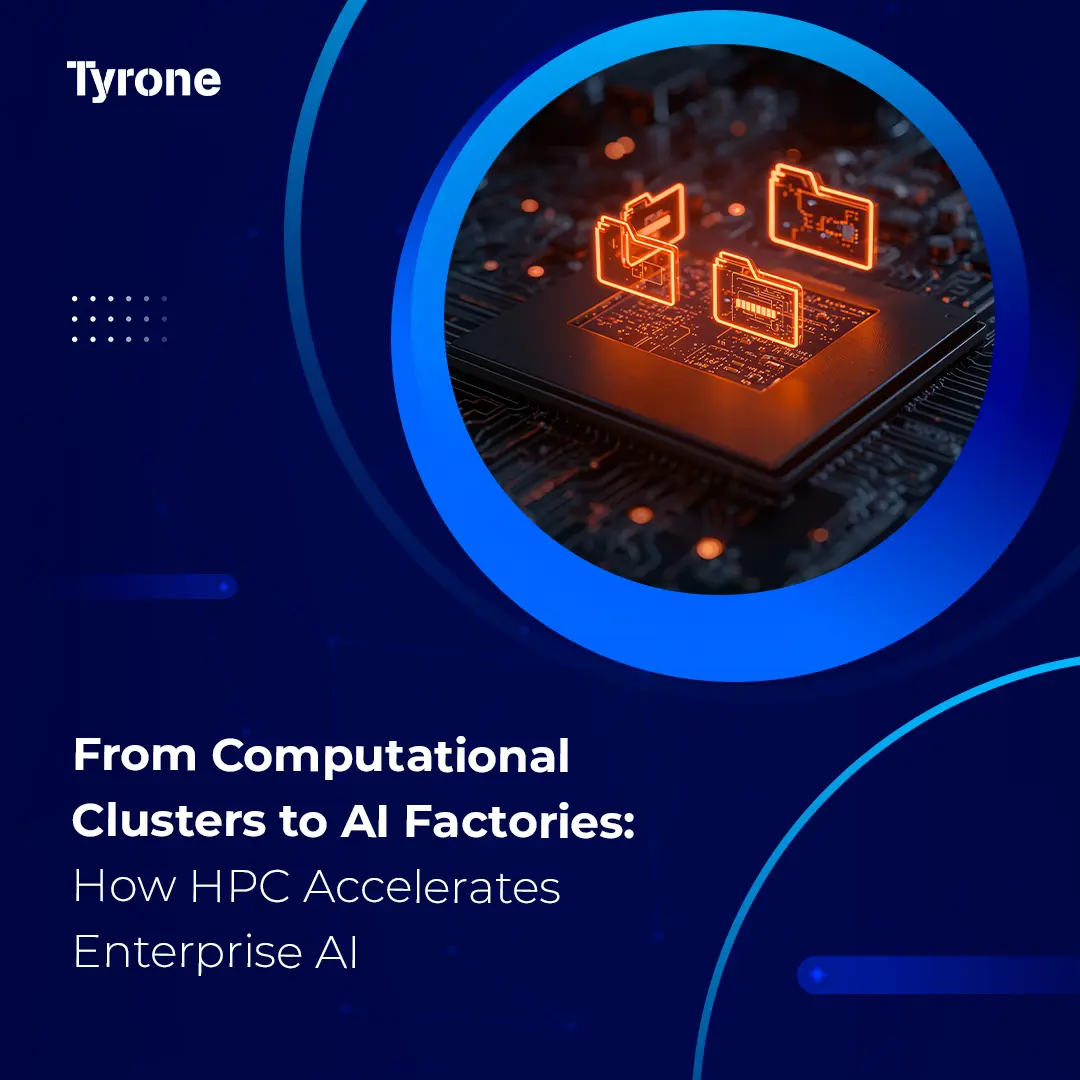
From Computational Clusters to AI Factories: How HPC Accelerates Enterprise AI
AI factories are not built from models alone. They need computational clusters, HPC infrastructure, GPU computing, storage and governance working together. Learn how our latest video shows how HPC can accelerate enterprise AI and turn scalable computing into measurable business impact.
Get in touch info@tyronesystems.com