Introduction
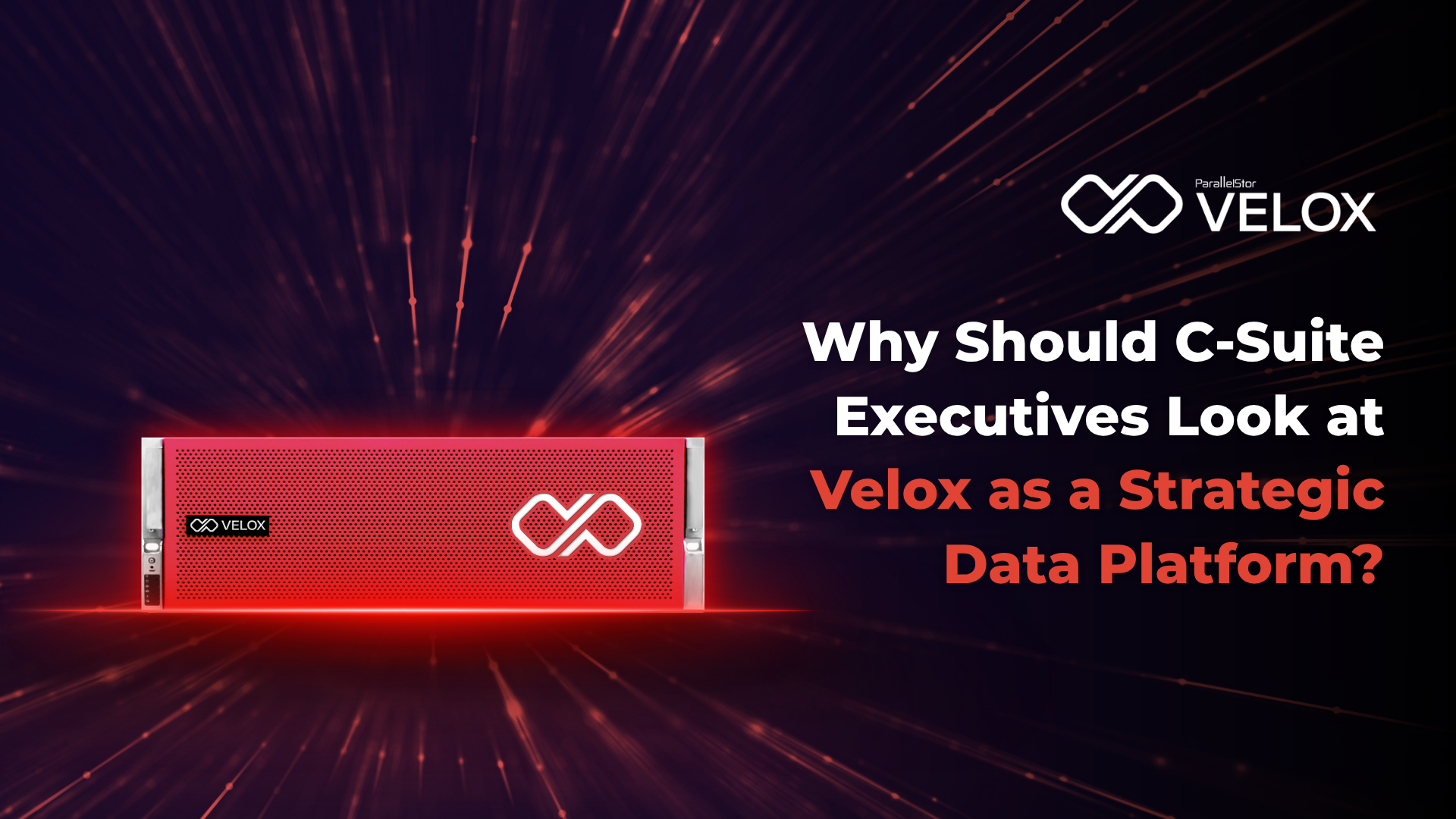
For today’s C-suite, storage is no longer a back-end infrastructure conversation. It has become a boardroom issue linked to cost, agility, resilience, compliance, and competitive advantage. As enterprises generate more data across on-premises systems, edge locations, multiple clouds, analytics platforms, and AI environments, the challenge is not simply storing that data. The real challenge is turning it into a secure, accessible, and cost-efficient business asset. That is where ParallelStor Velox becomes relevant. Velox is positioned as a unified enterprise storage platform designed to reduce fragmentation, improve performance, strengthen governance, and simplify hybrid data operations.
Cost Optimization and ROI: Moving Beyond Expensive Storage Sprawl
The global data storage market was valued at around USD 255 billion in 2025 and is projected to grow to USD 298 billion in 2026, with a CAGR of over 16% through 2034, fuelled by big data, AI, and digital transformation. In many organizations, large volumes of infrequently accessed or “cold” data continue to sit on expensive primary storage. Over time, this drives up infrastructure spending, increases administrative burden, and reduces the return on IT investments. Velox addresses this with policy-driven tiering and intelligent lifecycle automation that moves data across flash, disk, cloud, and tape according to value and usage. Velox can reduce data retention costs by up to 90% while maintaining transparent user access.
For the C-suite, this matters because it changes the economics of digital growth. Instead of expanding premium storage for every workload, enterprises can place data on the most appropriate tier without disrupting users or applications. This reduces unnecessary cloud dependency, optimizes on-prem investments, and creates a more balanced hybrid storage model. From an ROI standpoint, Velox is not just about saving money. It is about aligning storage spend with business value, reducing waste, and allowing IT budgets to support innovation rather than inefficiency.
Data-Driven Decision Making: Better Access, Better Insight, Better Speed
Executives increasingly depend on real-time insights for decisions related to growth, risk, operations, customer experience, and innovation. But fragmented storage environments often delay analytics because teams cannot access a trusted, consistent version of data across departments and geographies. Velox addresses this by creating a single global namespace across data centres and clouds, giving users and applications unified access to data irrespective of where it physically resides.
This becomes strategically important when organizations are scaling analytics, AI, and high-performance workloads. Velox supports multiple access protocols including POSIX, NFS, SMB, S3, and HDFS on the same dataset, which means data scientists, business analysts, developers, and enterprise applications can work on common data without creating multiple copies
For a leadership team, the value is clear: faster access to trusted data means faster decisions. Whether the use case is customer intelligence, operational forecasting, fraud analytics, AI model training, or enterprise reporting, Velox helps reduce the lag between data creation and business action. That directly supports a more data-driven culture at the top.
Risk Mitigation and Cybersecurity: Protecting What Matters Most
Global ransomware costs are projected at USD 57 billion annually in 2025, with recovery expenses averaging USD 1.53 million (excluding ransoms), and median demands reaching millions in enterprise cases. That is why Cybersecurity and risk management are now central responsibilities at the executive level. Sensitive intellectual property, regulated records, financial data, and customer information are under constant threat from ransomware, insider misuse, and compliance failures. Velox is positioned with enterprise-grade security capabilities including encryption at rest and in transit, role-based access controls, audit logging, and immutable file or snapshot options designed to support data integrity and regulatory requirements.
This is highly relevant for CTOs and CIOs looking to implement secure storage architectures without compromising operational performance. Rather than treating security as a disconnected overlay, Velox integrates protection and governance into the storage foundation itself. In the event of a ransomware attempt or policy audit, these capabilities help reduce exposure, preserve recoverability, and improve accountability. For the C-suite, that translates into lower operational risk, stronger business continuity, and greater confidence in governance frameworks.
A Strategic Fit for Hybrid Cloud Leadership
Many enterprises are pursuing hybrid and multi-cloud strategies, but inconsistent data management across platforms often creates complexity instead of agility. Velox is containerized, cloud-ready, and capable of supporting Kubernetes and OpenShift environments while keeping data services consistent across on-prem and cloud deployments. Its unified data fabric approach allows organizations to simplify hybrid operations while retaining control over performance, placement, and compliance.
For executives, this means greater flexibility without losing governance. Data can move where it makes most business sense, while the enterprise maintains control over cost, resilience, and access.
Conclusion
Velox should be viewed by C-suite leaders not merely as a storage product, but as a strategic enabler of enterprise performance. It helps reduce costs through intelligent tiering, supports better decision-making through unified and high-speed data access, and strengthens risk posture through integrated security and compliance features. In a business climate where data is both a critical asset and a growing liability, Velox offers a practical path to making enterprise data more economical, actionable, and secure.